Becoming Myself: A Psychiatrist's Memoir

Becoming Myself: A Psychiatrist's Memoir

Irvin D. Yalom

Literature & Fiction / Psychology

Bestselling writer and psychotherapist Irvin D. Yalom puts himself on the couch in a lapidary memoir. Irvin D. Yalom has made a career of investigating the lives of others. In this profound memoir, he turns his writing and his therapeutic eye on himself. He opens his story with a nightmare: He is twelve and is riding his bike past the home of an acne-scarred girl. Like every morning, he calls out, hoping to befriend her, "Hello Measles!" But in his dream, the girl's father makes Yalom understand that his daily greeting had hurt her. For Yalom, this was the birth of empathy; he would not forget the lesson. As Becoming Myself unfolds, we see the birth of the insightful thinker whose books have been a beacon to so many. This is not simply a man's life story, Yalom's reflections on his life and development are an invitation for us to reflect on the origins of our own selves and the meanings of our lives.
Read online
  • 782
Love's Executioner and Other Tales of Psychotherapy

Love's Executioner and Other Tales of Psychotherapy

Irvin D. Yalom

Literature & Fiction / Psychology

The collection of ten absorbing tales by master psychotherapist Irvin D. Yalom uncovers the mysteries, frustrations, pathos, and humor at the heart of the therapeutic encounter. In recounting his patients' dilemmas, Yalom not only gives us a rare and enthralling glimpse into their personal desires and motivations but also tells us his own story as he struggles to reconcile his all-too human responses with his sensibility as a psychiatrist. Not since Freud has an author done so much to clarify what goes on between a psychotherapist and a patient.
Read online
  • 583
The Schopenhauer Cure

The Schopenhauer Cure

Irvin D. Yalom

Literature & Fiction / Psychology

Suddenly confronted with his own mortality after a routine checkup, eminent psychotherapist Julius Hertzfeld is forced to reexamine his life and work -- and seeks out Philip Slate, a sex addict whom he failed to help some twenty years earlier. Yet Philip claims to be cured -- miraculously transformed by the pessimistic teachings of German philosopher Arthur Schopenhauer -- and is, himself, a philosophical counselor in training. Philips dour, misanthropic stance compels Julius to invite Philip to join his intensive therapy group in exchange for tutoring on Schopenhauer. But with mere months left, life may be far too short to help Philip or to compete with him for the hearts and minds of the group members. And then again, it might be just long enough.
Read online
  • 235
Coinman: An Untold Conspiracy

Coinman: An Untold Conspiracy

Pawan Mishra

Humor and Comedy / Fiction / Psychology

Coinman is one of life's victims, the receiver of subtle bullying in an office environment and thinly disguised control in his own home, but remains true to his desire to be polite and accepting of how he is treated by everyone. Then an incident at work changes all that. Huffington Post: One of the best literary fiction books of 2016 (Independently Published).
Read online
  • 562
The Power of Habit: Why We Do What We Do in Life and Business

The Power of Habit: Why We Do What We Do in Life and Business

Charles Duhigg

Nonfiction / Psychology / Self Help

OVER 60 WEEKS ON THE NEW YORK TIMES BESTSELLER LIST With a new Afterword by the author   In The Power of Habit, Pulitzer Prize–winning business reporter Charles Duhigg takes us to the thrilling edge of scientific discoveries that explain why habits exist and how they can be changed. Distilling vast amounts of information into engrossing narratives that take us from the boardrooms of Procter & Gamble to sidelines of the NFL to the front lines of the civil rights movement, Duhigg presents a whole new understanding of human nature and its potential. At its core, The Power of Habit contains an exhilarating argument: The key to exercising regularly, losing weight, being more productive, and achieving success is understanding how habits work. As Duhigg shows, by harnessing this new science, we can transform our businesses, our communities, and our lives. NEW YORK TIMES BESTSELLER • NPR BESTSELLER • WASHINGTON POST BESTSELLER • LOS ANGELES TIMES BESTSELLER • USA TODAY BESTSELLER • PUBLISHERS WEEKLY BESTSELLER NAMED ONE OF THE BEST BOOKS OF THE YEAR BY The Wall Street Journal • Financial Times “Sharp, provocative, and useful.”—Jim Collins “Few [books] become essential manuals for business and living. The Power of Habit is an exception. Charles Duhigg not only explains how habits are formed but how to kick bad ones and hang on to the good.”—Financial Times “A flat-out great read.”—David Allen, bestselling author of Getting Things Done: The Art of Stress-Free Productivity   “You’ll never look at yourself, your organization, or your world quite the same way.”—Daniel H. Pink, bestselling author of Drive and A Whole New Mind *  “Entertaining . . . enjoyable . . . fascinating . . . a serious look at the science of habit formation and change.”—The New York Times Book Review “Cue: see cover. Routine: read book. Reward: fully comprehend the art of manipulation.”—Bloomberg Businessweek   “Absolutely fascinating.”—Wired “A fresh examination of how routine behaviors take hold and whether they are susceptible to change . . . The stories that Duhigg has knitted together are all fascinating in their own right, but take on an added dimension when wedded to his examination of habits.”*— Associated Press   “There’s been a lot of research over the past several years about how our habits shape us, and this work is beautifully described in the new book The Power of Habit.”—David Brooks, *The New York Times  * “A first-rate book—based on an impressive mass of research, written in a lively style and providing just the right balance of intellectual seriousness with practical advice on how to break our bad habits.”—The Economist  * “I have been spinning like a top since reading The Power of Habit, New York Times journalist Charles Duhigg’s fascinating best-seller about how people, businesses and organizations develop the positive routines that make them productive—and happy.”—*The Washington Post From the Trade Paperback edition.
Read online
  • 342
The Language Instinct: How the Mind Creates Language

The Language Instinct: How the Mind Creates Language

Steven Pinker

Language / Psychology / History

The classic book on the development of human language by the world’s leading expert on language and the mind. In this classic, the world's expert on language and mind lucidly explains everything you always wanted to know about language: how it works, how children learn it, how it changes, how the brain computes it, and how it evolved. With deft use of examples of humor and wordplay, Steven Pinker weaves our vast knowledge of language into a compelling story: language is a human instinct, wired into our brains by evolution. The Language Instinct received the William James Book Prize from the American Psychological Association and the Public Interest Award from the Linguistics Society of America. This edition includes an update on advances in the science of language since The Language Instinct was first published.
Read online
  • 394
Enlightenment Now

Enlightenment Now

Steven Pinker

Language / Psychology / History

"My new favorite book of all time." —Bill Gates "A terrific book...[Pinker] recounts the progress across a broad array of metrics, from health to wars, the environment to happiness, equal rights to quality of life." —The New York TimesThe follow-up to Pinker's groundbreaking The Better Angels of Our Nature presents the big picture of human progress: people are living longer, healthier, freer, and happier lives, and while our problems are formidable, the solutions lie in the Enlightenment ideal of using reason and science.Is the world really falling apart? Is the ideal of progress obsolete? In this elegant assessment of the human condition in the third millennium, cognitive scientist and public intellectual Steven Pinker urges us to step back from the gory headlines and prophecies of doom, which play to our psychological biases. Instead, follow the data: In seventy-five jaw-dropping graphs, Pinker shows...
Read online
  • 800
The Better Angels of Our Nature: Why Violence Has Declined

The Better Angels of Our Nature: Why Violence Has Declined

Steven Pinker

Language / Psychology / History

Selected by The New York Times Book Review as a Notable Book of the Year. * The author of The New York Times bestseller The Stuff of Thought* offers a controversial history of violence. Faced with the ceaseless stream of news about war, crime, and terrorism, one could easily think we live in the most violent age ever seen. Yet as New York Times bestselling author Steven Pinker shows in this startling and engaging new work, just the opposite is true: violence has been diminishing for millennia and we may be living in the most peaceful time in our species's existence. For most of history, war, slavery, infanticide, child abuse, assassinations, pogroms, gruesome punishments, deadly quarrels, and genocide were ordinary features of life. But today, Pinker shows (with the help of more than a hundred graphs and maps) all these forms of violence have dwindled and are widely condemned. How has this happened? This groundbreaking book continues Pinker's exploration of the essence of human nature, mixing psychology and history to provide a remarkable picture of an increasingly nonviolent world. The key, he explains, is to understand our intrinsic motives- the inner demons that incline us toward violence and the better angels that steer us away-and how changing circumstances have allowed our better angels to prevail. Exploding fatalist myths about humankind's inherent violence and the curse of modernity, this ambitious and provocative book is sure to be hotly debated in living rooms and the Pentagon alike, and will challenge and change the way we think about our society.
Read online
  • 682
The Blank Slate: The Modern Denial of Human Nature

The Blank Slate: The Modern Denial of Human Nature

Steven Pinker

Language / Psychology / History

In The Blank Slate, Steven Pinker explores the idea of human nature and its moral, emotional, and political colorings. He shows how many intellectuals have denied the existence of human nature by embracing three linked dogmas: the Blank Slate (the mind has no innate traits), the Noble Savage (people are born good and corrupted by society), and the Ghost in the Machine (each of us has a soul that makes choices free from biology). Each dogma carries a moral burden, so their defenders have engaged in desperate tactics to discredit the scientists who are now challenging them. Pinker injects calm and rationality into these debates by showing that equality, progress, responsibility, and purpose have nothing to fear from discoveries about a rich human nature. He disarms even the most menacing threats with clear thinking, common sense, and pertinent facts from science and history. Despite its popularity among intellectuals during much of the twentieth century, he argues, the doctrine of the Blank Slate may have done more harm than good. It denies our common humanity and our individual preferences, replaces hardheaded analyses of social problems with feel-good slogans, and distorts our understanding of government, violence, parenting, and the arts. Pinker shows that an acknowledgement of human nature that is grounded in science and common sense, far from being dangerous, can complement insights about the human condition made by millennia of artists and philosophers. All this is done in the style that earned his previous books many prizes and worldwide acclaim: wit, lucidity, and insight into matters great and small.
Read online
  • 1 037
We Are US...

We Are US...

Sarah Ann Walker

Fiction / Romance / Psychology

The emotional conclusion to the I am HER... trilogy. Does everything become amazing because you have the man and the life of your dreams? Does the nightmare stop, and the past fade? No, it doesn't. The past is always there, simmering in the background, stewing and bubbling to the surface of your soul. The past is always there no matter how much you wish it would go away and leave you alone. No matter how hard you try or how far you come, life never changes. For HER or for him. Life continues until you wake one day beyond the storms of insanity to realize you will always love, no matter how tragic the heartache and pain becomes. This is our good, bad, ugly and beautiful. And together, we are US...
Read online
  • 453
My Dear Stranger

My Dear Stranger

Sarah Ann Walker

Fiction / Romance / Psychology

"Last night my dear stranger came to me..." Sadie Adams spent years hiding a secret in her journal. A beautiful secret wrapped in a dear stranger who came to her in the night. A stranger who came to her filled with love, passion, and devotion. And her only release from her secret days and her lonely nights came from her journal; a journal that kept her company as life slowly passed her by while she anxiously waited for his return. "How do you live, when you've spend your life waiting alone?" Waiting, the darkness and pain grew until within the grip of loneliness and death, she finally found a light to hold onto. Brighter and kinder than anyone she had ever known, Sadie finally chose to live in a world of light... Even as a Darkness was born to destroy her.
Read online
  • 218
(Mis)Trust

(Mis)Trust

Sarah Ann Walker

Fiction / Romance / Psychology

My mum's words always echo in my mind... "You can never trust a man with your heart. Men don't know what to do with a heart that's been given to them- so they break it." But what happens to the woman who trusts with her heart after he breaks it? I know, she fractures and shatters. Knowing the definitions of the words that have defined me, this is my understanding. Trust- To give oneself over to believing in a person or situation. Distrust- The inability to trust or believe in a person or situation. Mistrust- To be suspicious of a person or situation because you have no confidence in them. The words themselves are simple, yet the definition of mistrust is not. There is an element of grey and undefinable to mistrusting. And sadly, it's this grey undefinable that has hurt me most in life. I wanted to trust, but I just couldn't do it anymore. Then I met him. And he became my black and my white. He became the beautiful exception to everything I had ever known before him.
Read online
  • 158
Lost

Lost

Sarah Ann Walker

Fiction / Romance / Psychology

My name is Sophie Morley, and this is my story of loss. I used to be mature, professional, and stable. I used to have friends and colleagues who respected me. I used to be someone I respected. I knew the life I wanted, and I lived within my forever plans. I was everything I thought I should be. Then I met the man of my dreams, and everything changed in me. Everything I was and everything I was to become changed with his love. And I've never regretted one single moment of the life we shared. My name is Sophie Morley, and I am lost.
Read online
  • 231
This Is Me...

This Is Me...

Sarah Ann Walker

Fiction / Romance / Psychology

WARNING- GRAPHIC CONTENT and THEMES The tragic conclusion to 'I am HER...' Finally... She has a name. She has a past and she has a history. She knows who she is. And she knows who she wanted to be. She knows the way to all she ever wanted, but she knows she can't change the past that destroyed her. "I swear I'm here, but I'm not. I swear I can feel, but I don't. I swear I hear people, but I'm all alone. Where am I? What have I done?" If everything you knew was nothing you know, how do you begin to live again? When beautiful dreams surround you but darkness consumes you, how do you begin to live anew? "After I exhale, I turn to my empty room once again. In the silence that follows my tears, I am washed in clarity. I am NOT her. THIS is me..."
Read online
  • 883
I Am Her...

I Am Her...

Sarah Ann Walker

Fiction / Romance / Psychology

A sometimes funny, tragically graphic, compelling tale of a woman suffering... WARNING- GRAPHIC CONTENT and THEMES She has no name of her own. She is every name everyone has ever called her. She is nameless. She has a good job, a beautiful home and a wonderful husband. She is everything she was supposed to be. She has structure and stability, but she is lost. She is trying. Her whole life is spent trying; yet her whole life has been nothing but an apology. She is so tired of trying and failing. In just one week, she learns her entire life is a series of brutalities. She learns intense, consuming passion for the first time with a beautiful stranger. She learns love within this passion, and she learns heartbreak while without. Slowly her breakdown overcomes her. She tries to rise above her circumstances, but when she has nothing left to fight with; she tries to ease the pain forever. Desperately, she fights her way through the agony of life, and she returns with a gentle hope. She wants to live, and she wants to love, for the first time in her life. Now, she has a name. Now, she can be 'her'... Any HER that she wants to be.
Read online
  • 779
Bad Science

Bad Science

Ben Goldacre

Science / Psychology

Full of spleen, this is a hilarious, invigorating and informative journey through the world of Bad Science. When Dr Ben Goldacre saw someone on daytime TV dipping her feet in an 'Aqua Detox' footbath, releasing her toxins into the water, turning it brown, he thought he'd try the same at home. 'Like some kind of Johnny Ball cum Witchfinder General', using his girlfriend's Barbie doll, he gently passed an electrical current through the warm salt water. It turned brown. In his words: 'before my very eyes, the world's first Detox Barbie was sat, with her feet in a pool of brown sludge, purged of a weekend's immorality.' Dr Ben Goldacre is the author of the Bad Science column in the Guardian. His book is about all the 'bad science' we are constantly bombarded with in the media and in advertising. At a time when science is used to prove everything and nothing, everyone has their own 'bad science' moments from the useless pie-chart on the back of cereal packets to the use of the word 'visibly' in cosmetics ads.
Read online
  • 767
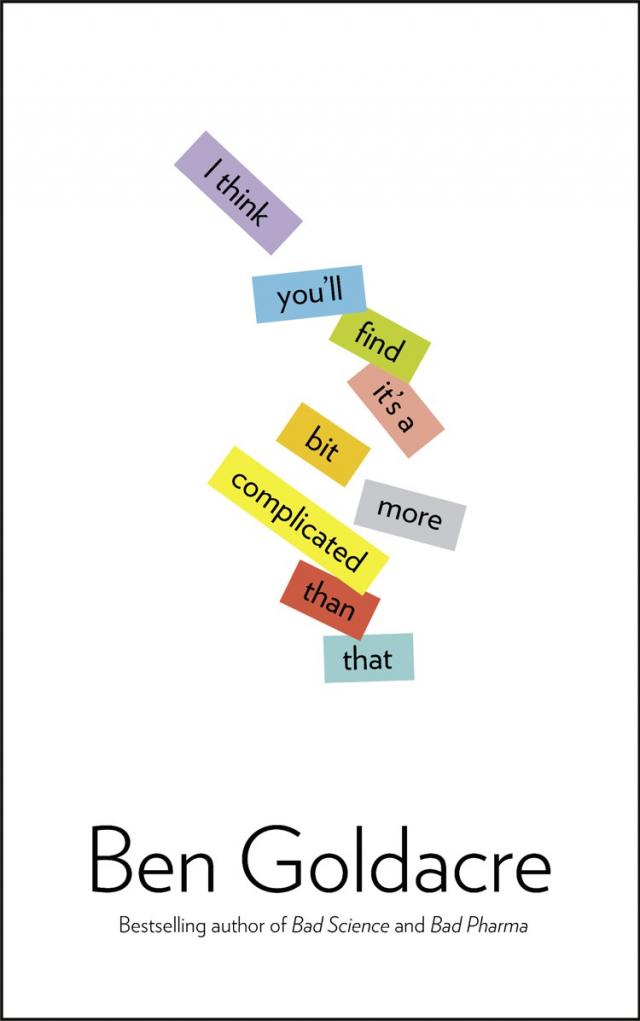
I Think You'll Find It's a Bit More Complicated Than That

I Think You'll Find It's a Bit More Complicated Than That

Ben Goldacre

Science / Psychology

The very best journalism from one of Britain's most admired and outspoken science writers, author of the bestselling Bad Science and Bad Pharma. In 'Bad Science', Ben Goldacre hilariously exposed the tricks that quacks and journalists use to distort science. In 'Bad Pharma', he put the $600 billion global pharmaceutical industry under the microscope. Now the pick of the journalism by one of our wittiest, most indignant and most fearless commentators on the worlds of medicine and science is collected in one volume.
Read online
  • 900
The Quiet Room

The Quiet Room

Lori Schiller

Psychology / Nonfiction / Autobiography

At seventeen Lori Schiller was the perfect child -- the only daughter of an affluent, close-knit family. Six years later she made her first suicide attempt, then wandered the streets of New York City dressed in ragged clothes, tormenting voices crying out in her mind. Lori Schiller had entered the horrifying world of full-blown schizophrenia. She began an ordeal of hospitalizations, halfway houses, relapses, more suicide attempts, and constant, withering despair. But against all odds, she survived. Now in this personal account, she tells how she did it, taking us not only into her own shattered world, but drawing on the words of the doctors who treated her and family members who suffered with her. In this new addition, Lori Schiller recounts the dramatic years following the original publication -- a period involving addiction, relapse, and ultimately, love and recovery.Moving, harrowing, and ultimately uplifting, THE QUIET ROOM is a classic testimony to the...
Read online
  • 143
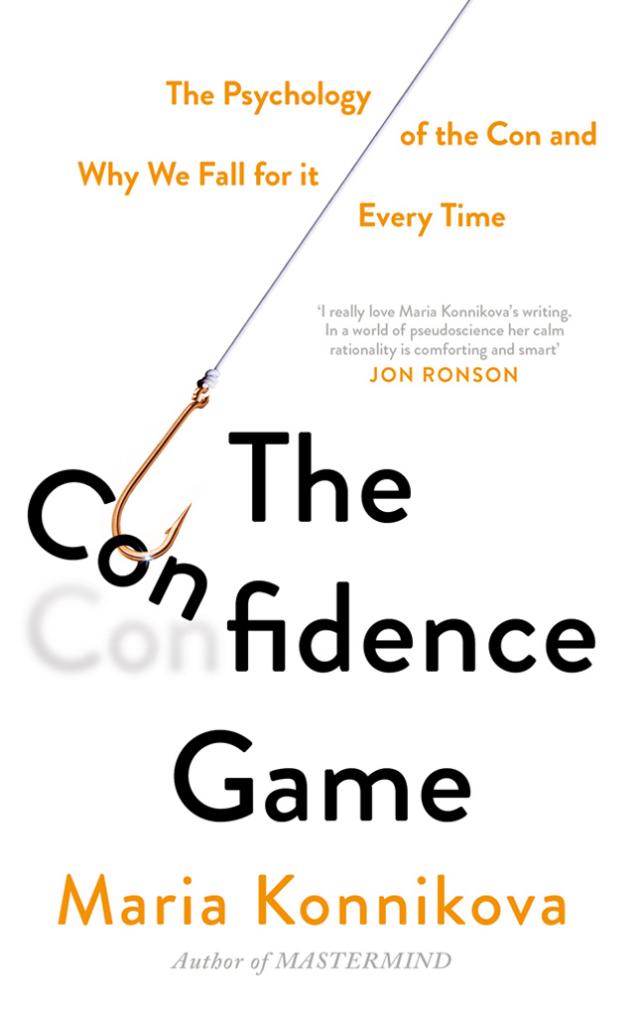
The Confidence Game

The Confidence Game

Maria Konnikova

Nonfiction / Psychology / Science

True con artists - the Bernie Madoffs, the Clark Rockefellers, the Lance Armstrongs - are elegant, outsized personalities, artists of persuasion and exploiters of trust. They hold a deep, enigmatic fascination for us. But how do they do it? Why are they successful? And what keeps us falling for it, over and over again? Whether it's a suspicious-looking email or a multimillion-dollar global swindle, Maria Konnikova investigates the psychological principles that underlie each stage of the confidence game - from the initial put-up, where the artist identifies the victim, to the eventual fix, where the artist persuades the victim to stay quiet. Exploring the psychological profile of both the con artist and his mark, we learn how grifters can be so persuasive, even to those of us who consider ourselves immune, and how we can train ourselves to discern the signs of a story that isn't quite what it seems. Insightful and entertaining, telling fascinating stories about some of the most...
Read online
  • 84
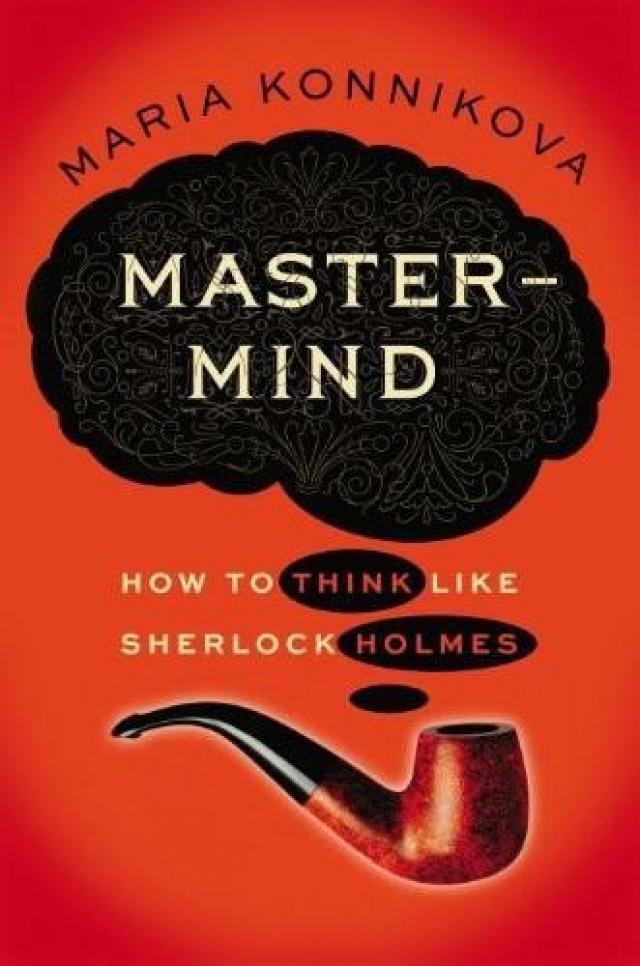
Mastermind: How to Think Like Sherlock Holmes

Mastermind: How to Think Like Sherlock Holmes

Maria Konnikova

Nonfiction / Psychology / Science

No fictional character is more renowned for his powers of thought and observation than Sherlock Holmes. But is his extraordinary intellect merely a gift of fiction, or can we learn to cultivate these abilities ourselves, to improve our lives at work and at home?We can, says psychologist and journalist Maria Konnikova, and in Mastermind she shows us how. Beginning with the "brain attic"--Holmes's metaphor for how we store information and organize knowledge--Konnikova unpacks the mental strategies that lead to clearer thinking and deeper insights. Drawing on twenty-first-century neuroscience and psychology, Mastermind explores Holmes's unique methods of ever-present mindfulness, astute observation, and logical deduction. In doing so, it shows how each of us, with some self-awareness and a little practice, can employ these same methods to sharpen our perceptions, solve difficult problems, and enhance our creative powers. For Holmes aficionados and casual readers alike, Konnikova reveals how the world's most keen-eyed detective can serve as an unparalleled guide to upgrading the mind.Review"Ingenious...thoughtful...covers a wide variety of material clearly and organizes it well." (The Wall Street Journal)"Steven Pinker meets Sir Arthur Conan Doyle in this entertaining, insightful look at how the fictional London crime-solver used sophisticated mental strategies to solve complex problems of logic and detection...practical, enjoyable book, packed with modern science." (The Boston Globe)"A treatise on how the Watsons of the world can smarten up...culled from Sir Arthur Conan Doyle's original works and cutting-edge psych research." (New York Post, "Required Reading")"Devotees of Arthur Conan Doyle's conundrum-cracker will be thrilled by this portmanteau of strategies for sharpening cognitive ability." (Nature)"Weaving together the fictional detective's cases and modern day neuroscience...important for solving cases or simply staying sharp as we age." (Psychology Today)"Based on modern neuroscience and psychology, the book explores Holmes's aptitude for mindfulness, logical thinking and observation...shares strategies that can lead to clearer thinking...help people become more self-aware" (Washington Post)"MASTERMIND is the book I didn't realize I was waiting for...surprising and ingenious...a gift to all readers interested in Conan Doyle, mysteries and scientific thinking as well as those who simply want to be more self-aware about the inner workings of our minds." (Matthew Pearl, New York Times-bestselling author of *The Dante Club)*"Not for Baker Street Irregulars alone, this fascinating look at how the mind works--replete with real-life case studies and engaging thought experiments--will be an eye-opening education for many." (Publisher's Weekly, Starred Review)"Bright and entertaining ... Will enthrall Baker Street aficionados while introducing many readers to the mindful way of life." (Kirkus Reviews)From the Back Cover"A delightful tour of the science of memory, creativity, and reasoning, illustrated with the help of history's most famous reasoner, Sherlock Holmes himself. Maria Konnikova is an engaging and insightful guide to this fascinating material, which will help you master your own mind."  (Steven Pinker, Harvard College Professor of Psychology, Harvard University, and author of How the Mind Works and The Stuff of Thought)"Far from elementary, Maria Konnikova's new book is a challenging and insightful study of the human mind, illustrated with cases from the career of Sherlock Holmes. Holmes himself would have been proud to author this fine work!"  (Leslie S. Klinger, New York Times-best-selling author/editor of *The New Annotated Sherlock Holmes*)"Maria Konnikova's bright and brilliant new book is nothing less than a primer on how be awake, a manual on how to work ourselves free of our unconscious biases, our habitual distractions, and the muddle of our everyday minds. Holmes fan or not, the reader will find Mastermind to be bracing, fascinating, and above all -- and most important -- hopeful."  (Daniel Smith, author of *Monkey Mind: A Memoir of Anxiety*)"'You know my methods,' Sherlock Holmes once said to Dr. Watson. 'Apply them!' Science writer Maria Konnikova has made those instructions the inspiration for what turns out to be a delightfully intelligent book. Using Holmes and Watson as both muse and metaphor, she shows us some of modern psychology's most important lessons for using our minds well. I probably won't be able to solve murders after having read Mastermind, but I will have much to reflect on." (Carl Zimmer, author of Soul Made Flesh and *Parasite Rex*)
Read online
  • 71
Jade Dragon (Action Girl Thrillers)

Jade Dragon (Action Girl Thrillers)

A. D. Phillips

Nonfiction / Psychology

Veteran homicide detective Lakeysia Symons and her womanizing partner Kyle Travis investigate the brutal murder of a San Francisco computer game developer. But his death is only the beginning. Faced with a rapidly escalating body count, the police find themselves under pressure to stop a scheming murderess with deadly martial arts skills. (Content warning: violence, sexual situations)
Read online
  • 56
A Great Idea at the Time

A Great Idea at the Time

Alex Beam

Nonfiction / History / Psychology

Today the classics of the western canon, written by the proverbial “dead white men,” are cannon fodder in the culture wars. But in the 1950s and 1960s, they were a pop culture phenomenon. The Great Books of Western Civilization, fifty-four volumes chosen by intellectuals at the University of Chicago, began as an educational movement, and evolved into a successful marketing idea. Why did a million American households buy books by Hippocrates and Nicomachus from door-to-door salesmen? And how and why did the great books fall out of fashion?In A Great Idea at the Time Alex Beam explores the Great Books mania, in an entertaining and strangely poignant portrait of American popular culture on the threshold of the television age. Populated with memorable characters, A Great Idea at the Time will leave readers asking themselves: Have I read Lucretius’s De Rerum Natura lately? If not, why not?
Read online
  • 57
A Long Crazy Burn

A Long Crazy Burn

Jeff Johnson

Design / Nonfiction / Psychology

Thrilling sequel to LUCKY SUPREME. Time is up in Old Town. As the pace of gentrification reaches frenzy in Portland, Oregon, Darby Holland's beloved tattoo parlor, Lucky Supreme, is destroyed by a bomb that ripped through an entire city block. Only a warning call from his favorite prostitute saved his life. Developers have been like wolves at the door of D'mitri (the drunken landlord) for the past few years, but this is different. With nothing to lose, Darby goes on a rampage to discover first the bomber then the developer who set everything in motion, and along the way falls under FBI suspicion, messes with dangerous pimps and drug lords, gets his face permanently rearranged, and, then, at the lowest point in his adult life, Darby Holland meets the woman of his dreams. Long, lanky, smart, and a foot taller than Darby, Suzanne is a woman of enormous appetite. Darby has finally met his match in bed and at the dinner table. But Suzanne, for all her strength and wisdom,...
Read online
  • 40
Assholes

Assholes

Aaron James

Nonfiction / Philosophy / Psychology

In the spirit of the mega-selling On Bullshit, philosopher Aaron James presents a philosophical and behavioral theory of the asshole that is both intellectually provocative and existentially necessary.What is it for someone to be an asshole? The answer is not obvious, despite the fact that we are often personally stuck dealing with people for whom there is no better name. Try as we might to avoid them, assholes are found everywhere--at work, at home, and in the public sphere. Encountering one causes great difficulty and personal strain, especially because we often cannot understand why exactly someone should be acting like that. Asshole management begins with asshole understanding. Doing for assholes what Machiavelli did for princes, this book gives us the concepts finally to think or say why some people disturb us so, and explains why assholes seem part of the human social condition, especially in an age of raging narcissism and...
Read online
  • 46
The Fear Factor

The Fear Factor

Abigail Marsh

Psychology / Nonfiction / Science

"A riveting ride through your own brain." -Adam GrantHow the brains of psychopaths and heroes show that humans are wired to be goodAt fourteen, Amber could boast of killing her guinea pig, threatening to burn down her home, and seducing men in exchange for gifts. She used the tools she had available to get what she wanted, like all children. But unlike other children, she didn't care about the damage she inflicted. A few miles away, Lenny Skutnik cared so much about others that he jumped into an ice-cold river to save a drowning woman. What is responsible for the extremes of generosity and cruelty humans are capable of? By putting psychopathic children and extreme altruists in an fMRI, acclaimed psychologist Abigail Marsh found that the answer lies in how our brain responds to others' fear. While the brain's amygdala makes most of us hardwired for good, its variations can explain heroic and psychopathic behavior.A path-breaking read, The Fear Factor is...
Read online
  • 25
Drunk Tank Pink: And Other Unexpected Forces That Shape How We Think, Feel, and Behave

Drunk Tank Pink: And Other Unexpected Forces That Shape How We Think, Feel, and Behave

Adam Alter

Business / Psychology / Technology

NEW YORK TIMES BESTSELLER.An illuminating look at the way the thoughts we have and the decisions we make are influenced by forces that aren't always in our controlWhy are people named Kim, Kelly, and Ken more likely to donate to Hurricane Katrina victims than to Hurricane Rita victims? Are you really more likely to solve puzzles if you watch a light bulb illuminate? How did installing blue lights along a Japanese railway line halt rising crime and suicide rates? Can decorating your walls with the right artwork make you more honest? The human brain is fantastically complex, having engineered space travel and liberated nuclear energy, so it's no wonder that we resist the idea that we're deeply influenced by our surroundings. As profound as they are, these effects are almost impossible to detect both as they're occurring and in hindsight. Drunk Tank Pink is the first detailed exploration of how our environment shapes what we think, how we feel, and the ways we behave.The world is populated with words and images that prompt unexpected, unconscious decisions. We are so deeply attracted to our own initials that we give more willingly to the victims of hurricanes that match our initials: Kims and Kens donate more generously to Hurricane Katrina victims, whereas Rons and Rachels give more openly to Hurricane Rita victims. Meanwhile, an illuminated light bulb inspires creative thinking because it symbolizes insight.Social interactions have similar effects, as professional cyclists pedal faster when people are watching. Teachers who took tea from the break room at Newcastle University contributed 300 percent more to a cash box when a picture of two eyes hung on the wall. We're evolutionarily sensitive to human surveillance, so we behave more virtuously even if we're only watched by a photograph. The physical environment, from locations to colors, also guides our hand in unseen ways. Dimly lit interiors metaphorically imply no one's watching and encourage dishonesty and theft, while blue lights discourage violent activity because they're associated with the police. Olympic taekwondo and judo athletes are more likely to win when they wear red rather than blue, because red makes them behave aggressively and referees see them as more dominant. Drunk Tank Pink is full of revelatory facts, riveting anecdotes, and cutting-edge experiments that collectively explain how the most unexpected factors lead us to think, feel, and behave the way we do.Review"Adam Alter's book will change the way you look at our world."—Dan Ariely, New York Times bestselling author of Predictably Irrational “You’ll laugh, you’ll gasp, you’ll shake your head in disbelief as Alter shows you that we are all, to some degree, balls in a giant pinball machine. If you want to see the bumpers — and regain some control of your destiny — read this delightful book.”—Jonathan Haidt, author of New York Times bestseller, The Righteous Mind"A fascinating compendium of the hidden currents that influence our thoughts, beliefs, and actions.”—Gary Marcus, New Yorker columnist, and author of New York Times bestseller, Guitar Zero"With remarkable clarity and subversive humor, Alter presents a radical new perspective on human nature."—Paul Bloom, author of How Pleasure Works "Adam Alter has collected the most wonderfully strange and surprising nuggets of recent psychological research in one book. I guarantee you'll be want to share the incredible anecdotes in Drunk Tank Pink with friends."—Joshua Foer, New York Times bestselling author of Moonwalking with Einstein "Drunk Tank Pink is a smart and delightful introduction to some of psychology’s most curious phenomena and most colorful characters."—Daniel Gilbert, New York Times bestselling author of Stumbling on Happiness"Reading Adam Alter’s book about the many ways our perceptions are affected is so compelling that it put me in a seriously suspicious frame of mind…he seems to realize that his material does not require much to make it fascinating—not even a fancy font."—The Smithsonian (a "Notable Book")"Popular NYU psychology and marketing professor Adam Alter has composed a fascinating tome about the hidden things that make us think, act, and feel the way we do. The debut result will please readers of Malcolm Gladwell and other writers about unexpected wonders. Editor's recommendation."—Barnes & Noble (A "Book of the Month" and "Editor's Recommendation" book)"Alter’s findings are intriguing…he peppers his text with illustrative anecdotes, incidents, studies and characters, making the book highly readable and informative."—Kirkus Reviews (A Kirkus Recommended book) "Alter not only explains the source of many cognitive quirks, but convincingly argues that comprehending them affords a better understanding of broader behaviors, from cyclical poverty to altruism... In Alter's hands, case studies take on new life... as he fluently moves between psychology, medicine, and cultural history, offering surprises to readers at many levels of expertise."—Publishers Weekly About the AuthorAdam Alter is an assistant professor in the marketing department at the Stern School of Business, New York University, with an affiliated appointment in the NYU psychology department. A native of Australia, Alter earned his Ph.D. in social psychology at Princeton University in 2004, focusing on how people reach the judgments and make the decisions that shape their lives. He has lectured at numerous institutions including Harvard, Yale, MIT, Stanford, Cornell, and the University of Chicago. Alter is a guest blogger on the Psychology Today website.
Read online
  • 36
Irresistible

Irresistible

Adam Alter

Business / Psychology / Technology

An urgent and expert investigation into behavioral addiction, the dark flipside of today's unavoidable digital technologies, and how we can turn the tide to regain control. Behavioral addiction may prove to be one of the most important fields of social, medical, and psychological research in our lifetime. The idea that behaviors can be being addictive is new, but the threat is near universal. Experts are just beginning to acknowledge that we are all potential addicts. Adam Alter, a professor of psychology and marketing at NYU, is at the cutting edge of research into what makes these products so compulsive, and he documents the hefty price we're likely to pay if we continue blindly down our current path. People have been addicted to substances for thousands of years, but for the past two decades, we've also been hooked on technologies, such as Instagram, Netflix, and Facebook—inventions that we've adopted because we assume they'll make our lives better. These...
Read online
  • 42
Unfair

Unfair

Adam Benforado

Psychology / Crime / Nonfiction

"A law professor sounds an explosive alarm on the hidden unfairness of our legal system." --Kirkus Reviews, starred A child is gunned down by a police officer; an investigator ignores critical clues in a case; an innocent man confesses to a crime he did not commit; a jury acquits a killer. The evidence is all around us: Our system of justice is fundamentally broken. But it's not for the reasons we tend to think, as law professor Adam Benforado argues in this eye-opening, galvanizing book. Even if the system operated exactly as it was designed to, we would still end up with wrongful convictions, trampled rights, and unequal treatment. This is because the roots of injustice lie not inside the dark hearts of racist police officers or dishonest prosecutors, but within the minds of each and every one of us. This is difficult to accept. Our nation is founded on the idea that the law is impartial, that legal cases are won or lost...
Read online
  • 60
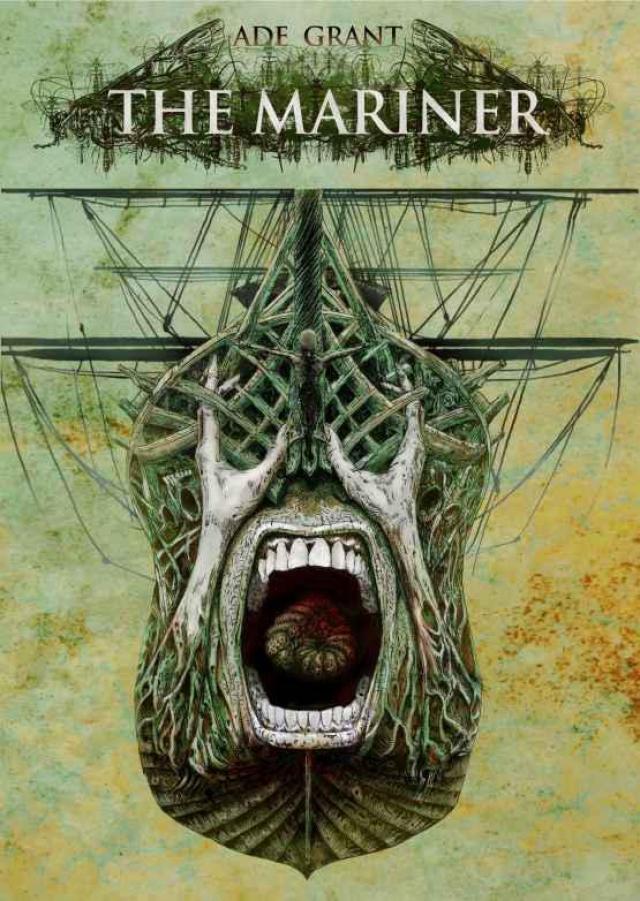
The Mariner

The Mariner

Ade Grant

Horror / Fantasy / Psychology

Hate Rage Persecution Mutilation IsolationGuilt Perversity Self-Harm Paedophilia AlcoholismDeviancy Devils Zombies Ostracism Pornography Wasps Insanity Masturbation Loneliness Voyeurism Addiction Murder Rape Depression True-Love & THE MARINERSailing through an endless ocean on an antique slaver, the Mariner is hopelessly alone. The few remaining settlements are broken husks peppered with survivors and dangerous cults, each and every one as lost as he. Fixated upon a need for answers in a world full of rot and with a deep sadomasochist streak, he’s a pervert, an addict and a monster, and might just hold the key to finding a route home.A post-apocalyptic jaunt through a psycho-sexual nightmare, Ade Grant’s debut novel takes an uncomfortably honest appraisal of male sexuality and acts as an enema to the very darkest elements that lurk within us all.
Read online
  • 52
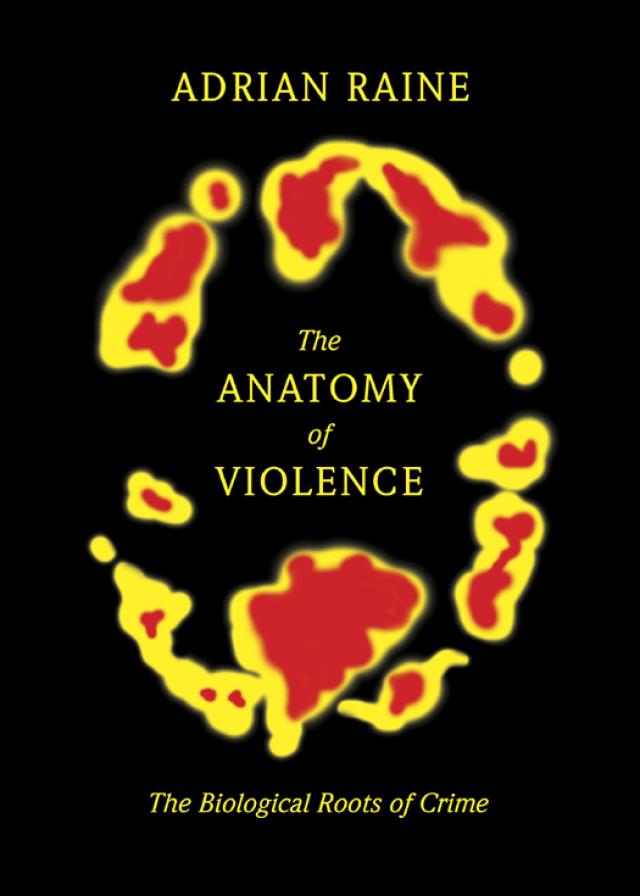
The Anatomy of Violence

The Anatomy of Violence

Adrian Raine

Psychology / Nonfiction / Science

With an 8-page full-color insert, and black-and-white illustrations throughoutWhy do some innocent kids grow up to become cold-blooded serial killers? Is bad biology partly to blame? For more than three decades Adrian Raine has been researching the biological roots of violence and establishing neurocriminology, a new field that applies neuroscience techniques to investigate the causes and cures of crime. In The Anatomy of Violence, Raine dissects the criminal mind with a fascinating, readable, and far-reaching scientific journey into the body of evidence that reveals the brain to be a key culprit in crime causation. Raine documents from genetic research that the seeds of sin are sown early in life, giving rise to abnormal physiological functioning that cultivates crime. Drawing on classical case studies of well-known killers in history--including Richard Speck, Ted Kaczynski, and Henry Lee Lucas--Raine illustrates how impairments to brain areas...
Read online
  • 35
155